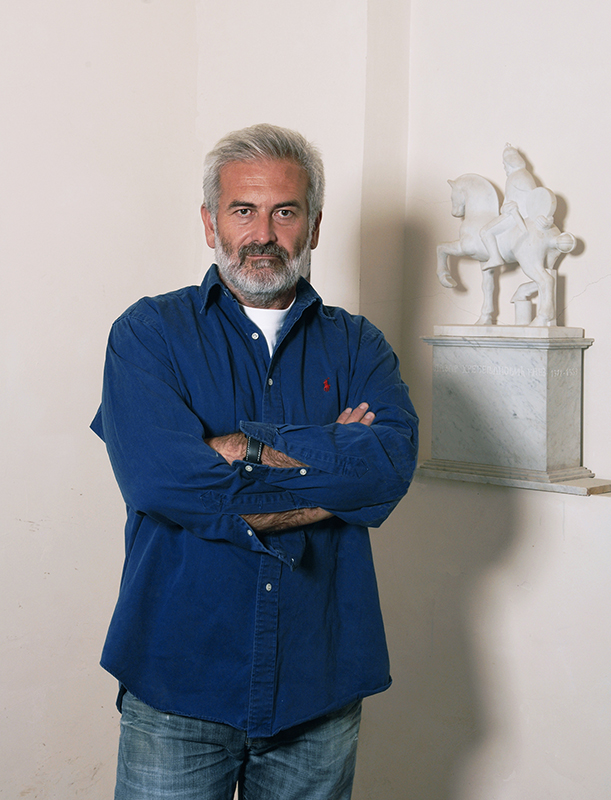
Full Professor, Department of Sculpture, Faculty of Fine Arts, University of Arts
in Belgrade, Serbia
Born in 1961 in Yugoslavia (present-day Serbia)
1989 – Received his master’s degree from the Faculty of Fine Arts, University
of Arts in Belgrade
1990–1994 – Worked as a part-time lecturer at the Academy of Fine Arts in Stockholm, Sweden, teaching modern stone sculpture
From 1989, he lived and worked in Pietrasanta, Italy. He works primarily in stone, metal and wood, producing both monumental and small-scale sculptures. His works are held in numerous private collections and museums worldwide, including in Italy, France, China, South Korea and Japan.
Over the course of his 40-year career, he has participated in 108 international sculpture events, received awards at 23 international art competitions and taken part in more than 150 group exhibitions worldwide. His monumental works can be found in collections in 33 countries, with approximately 130 sculptures represented.
Since 2012 – Core member of ISSA (International Sculpture Symposium Alliance), China.
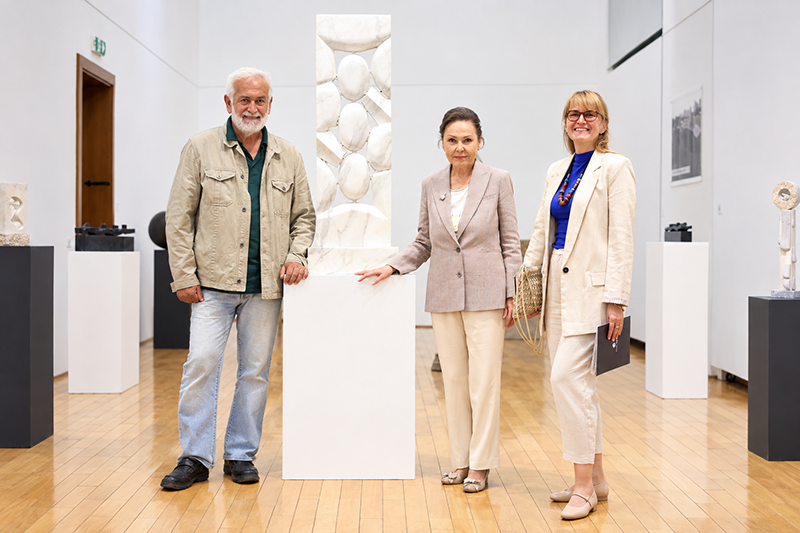
The Breath of Monumentality
Stone. Space. Monumentality. The sculptural oeuvre of Đorđe Čpajak.
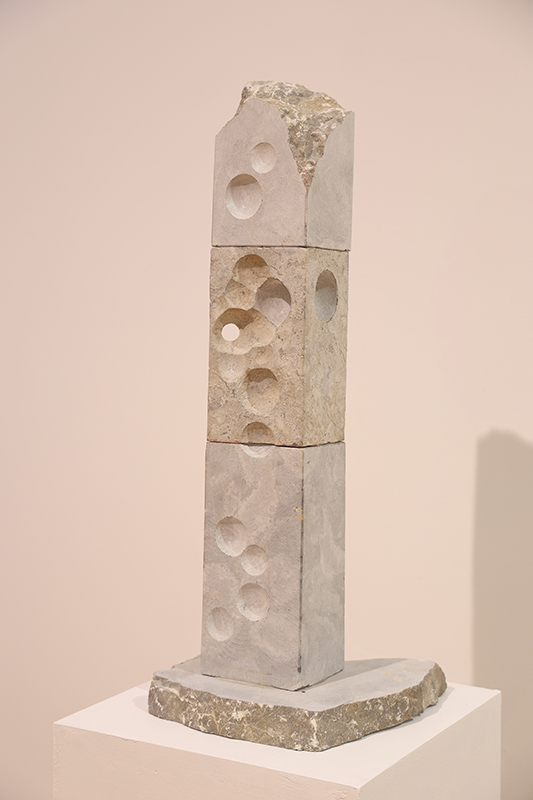
Throughout this artist’s sculptural oeuvre, stone is the material he uses most extensively and, as a primordial substance, undoubtedly the most challenging and inspiring. Marble, granite, basalt, travertine, sandstone, limestone… The wide range of possibilities inherent in stone itself, including its colour, structure, hardness, porosity and resonance, the warmth conveyed by rough-hewn stone and the impression of coldness produced by its polished surface, finds its fullest expression in the artist’s work.
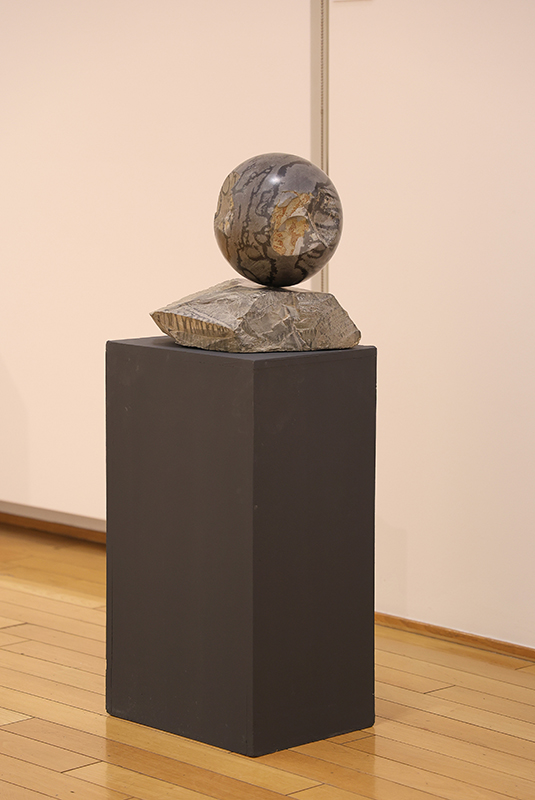
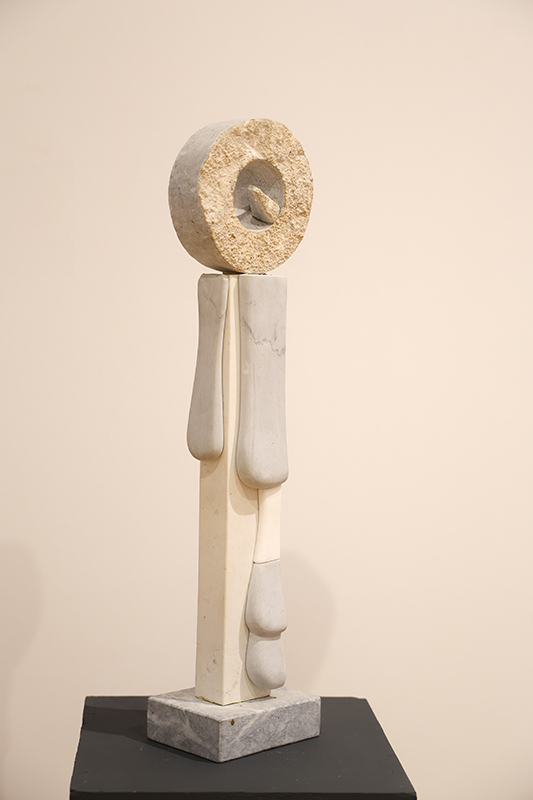
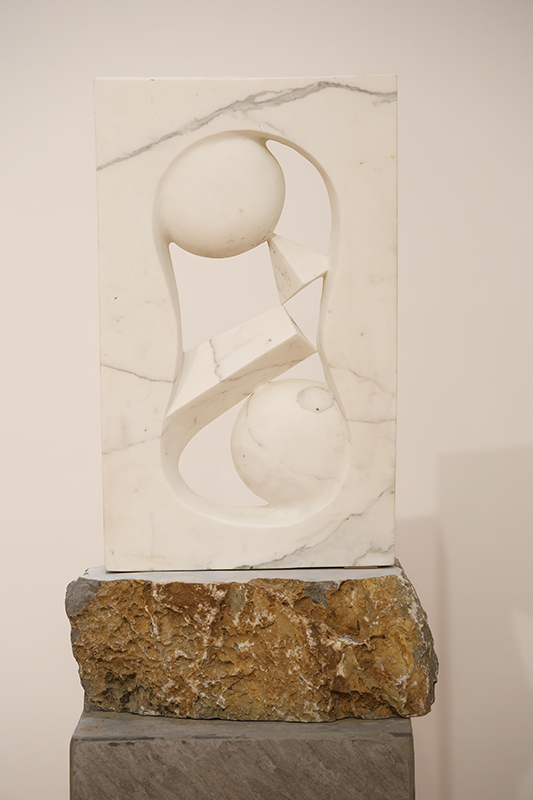
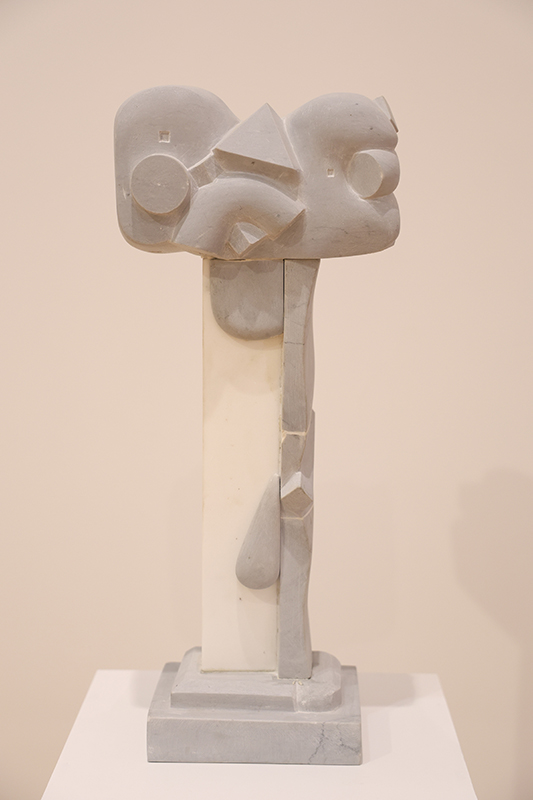
Đorđe Čpajak’s sculptural language is clearly that of monumental sculpture conceived for open spaces. This is evident above all in sculptural forms designed to be viewed and discovered from different angles, and to be perceived and experienced amid the atmosphere and constantly changing light of an outdoor setting, which continually reveals new and different relationships between light and shadow across the work itself. His sculptures are composed of several distinct elements, combining geometric and organic forms, even when carved from a single block of stone, thereby revealing a wealth of different facets and ways of experiencing the sculpture. Contrasting the “softness” of floating circular forms with the rigour of geometric shapes, straight lines and sharp angles, the artist brings them together into a unified, harmonious form. Alongside the carefully conceived sculptural whole, he achieves this through a considered choice of stone and the manner in which it is worked. For this type of sculpture, he chooses the brilliant whiteness of marble, but also the dark lustre of black granite. The plinths on which he places such sculptures are sometimes left roughly worked, so that the robust presence of the stone in its raw state further accentuates the delicacy with which the surface of the sculptural form itself has been treated. With their fullness and clear, clean planes, both in their individual forms and as complete compositions, sculptures of this type convey a compelling sense of monumentality, regardless of the small dimensions of some of the works. Another type of sculpture in his oeuvre, composed of several kinds of stone, may not possess the same pronounced monumentality, yet its vivid character draws the eye, inviting it to move slowly across every detail and take in the diversity of forms and the varied structures and textures of the stone.
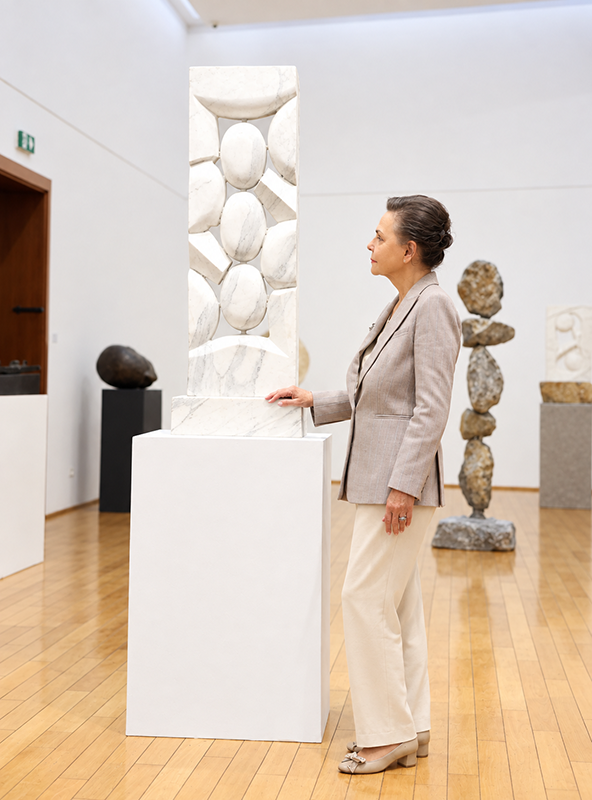
Judging by his exceptionally rich and diverse sculptural oeuvre to date, as well as by his artistic achievements, Đorđe Čpajak ranks among not only the most significant but also the most prolific sculptors on both the contemporary art scene in Serbia and internationally. This is demonstrated not only by the high artistic standard of his gallery-scale sculptures, but also by the considerable number of outstanding monumental works he has created for open spaces around the world. Having lived abroad for several decades, travelling and creating outdoor sculptures in many major centres around the world, and then spending the past decade living and working in Belgrade, he still seems to be far better known internationally than in Serbia. Mature and fully developed, Đorđe Čpajak’s body of work undoubtedly places him among the artists whose work is indispensable to the study of contemporary sculpture, particularly monumental sculpture.
Rajka Bošković PhD
Art Historian